The 43rd
National Suseok Exhibition
An overview of the 43rd National Suseok Exhibition in Pohang, Korea
By Thomas S. Elias
On November 15-17th, 2025, over 234 exceptional natural, unaltered rocks were displayed at the 43rd National Suseok Exhibition. These stones, selected for their shape, color, surface textures, and hardness, reflect the influence of Buddhist and Confucius beliefs and thoughts about the relationship between man and nature. Living in harmony with nature and appreciating beauty even in a small rock are important aspects of Korean viewing stone appreciation. Two hundred and thirty members of the Korean Suseok Association (KSA) selected stones from their native rivers, coastal areas, and seas from all regions of Korea for this annual event.
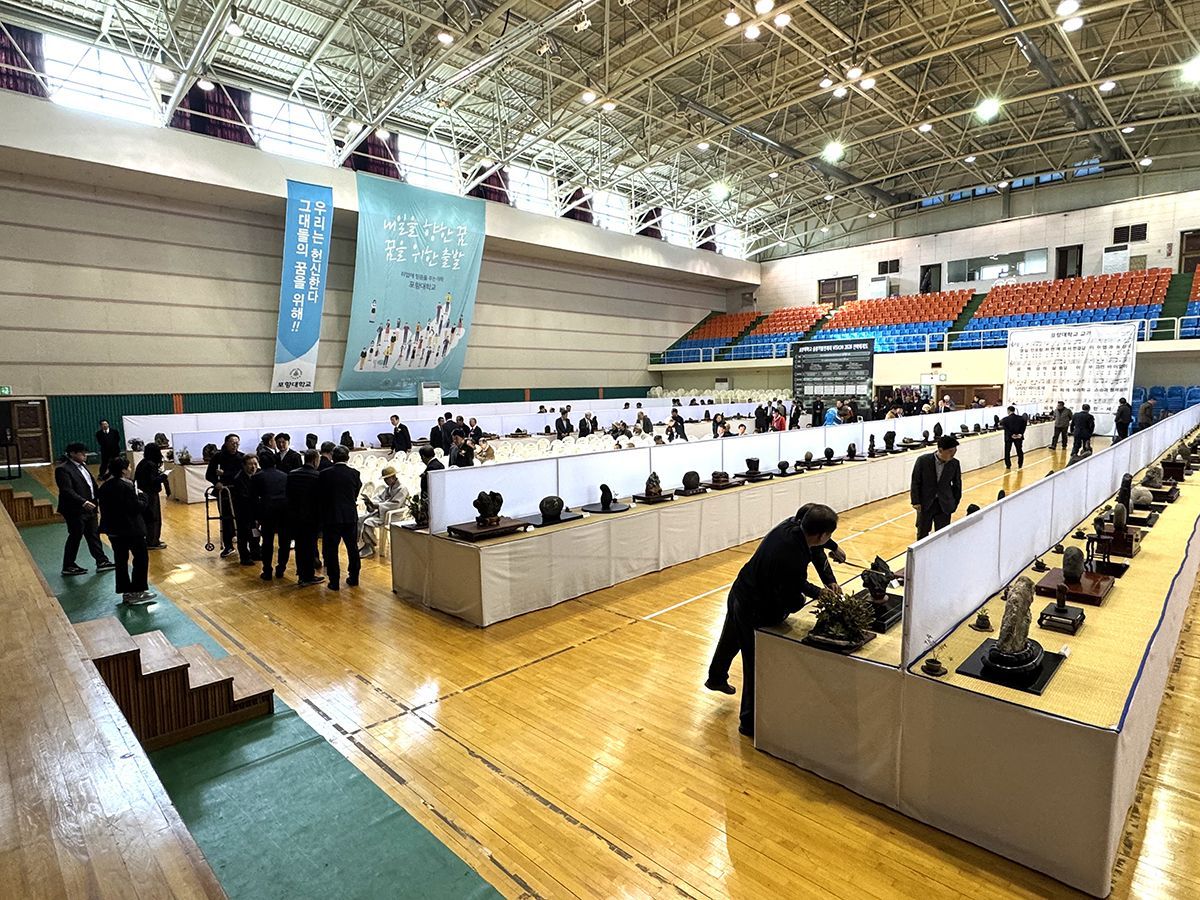
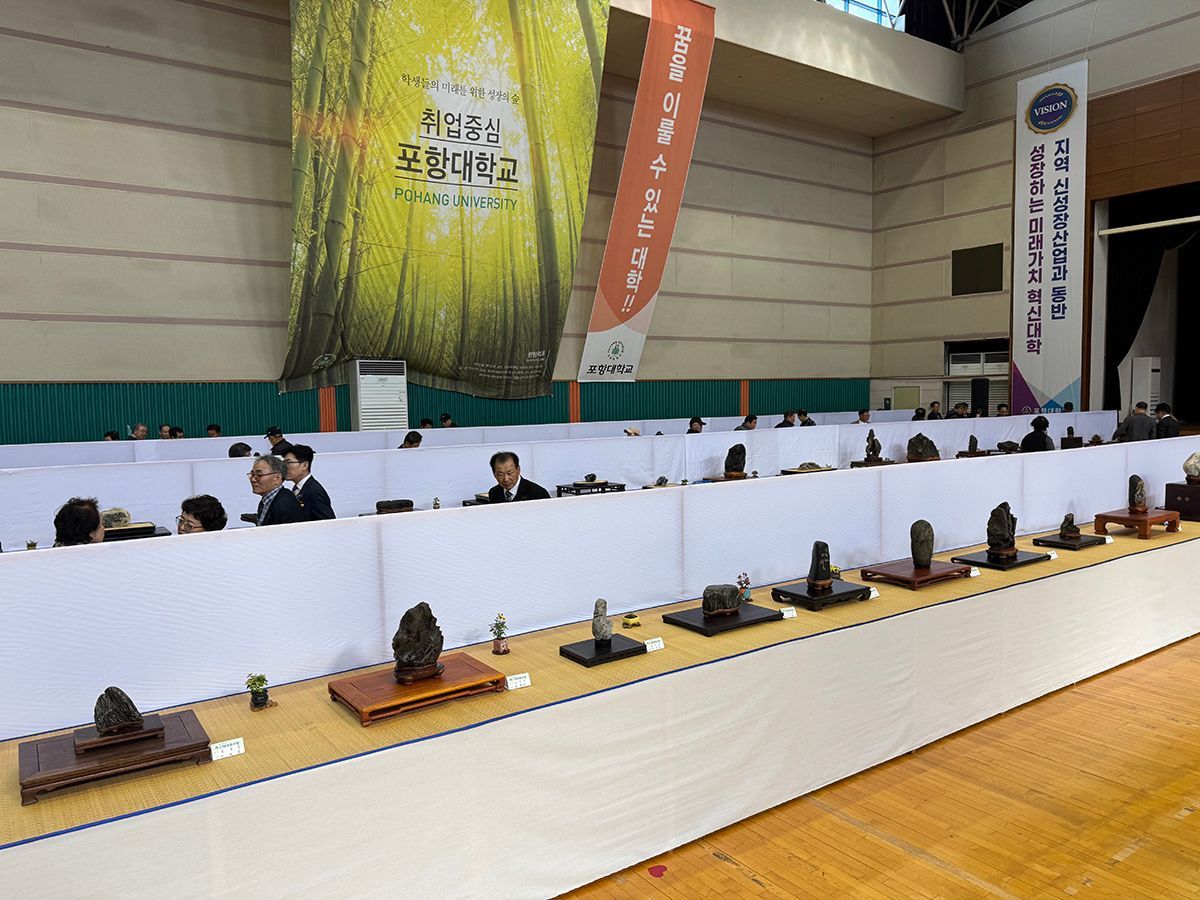
This year’s annual exhibition was held in the eastern sea coastal city of Pohang, the steel producing capital of Korea. The exhibition was held in the Pohang University’s Pyeongbo Gymnasium. The opening ceremony consisted of a series of welcoming remarks, singing the Korean national anthem, and the KSA’s official song. Kim Bong-jo, chairman of the executive committee said in his welcoming speech “I hope it will be a time for members to appreciate the works in pure domestic stones that they have cherished deeply.” Mr. Lee Seong-ki, chairman of the central committee, expressed in his remarks “that this will be a venue for a festival to promote the beauty of culture and strengthen communication and harmony among our senior citizens.
The exhibit was arranged by Provinces, and the Special Self-Governing Province of Jeju Island. Local club representatives from each of these regions were present to answer questions about their stones on display. Korean Suseok collectors greatly value stones that have not been cut, ground, or chemically or mechanically altered in anyway. As a result, Korean stones are less explicit than some stones seen in exhibitions in other countries where bottom cutting and other alterations are accepted. The sizes ranged from small, medium, to large. Larger rocks are sometimes displayed indoors similar to Chinese practices.
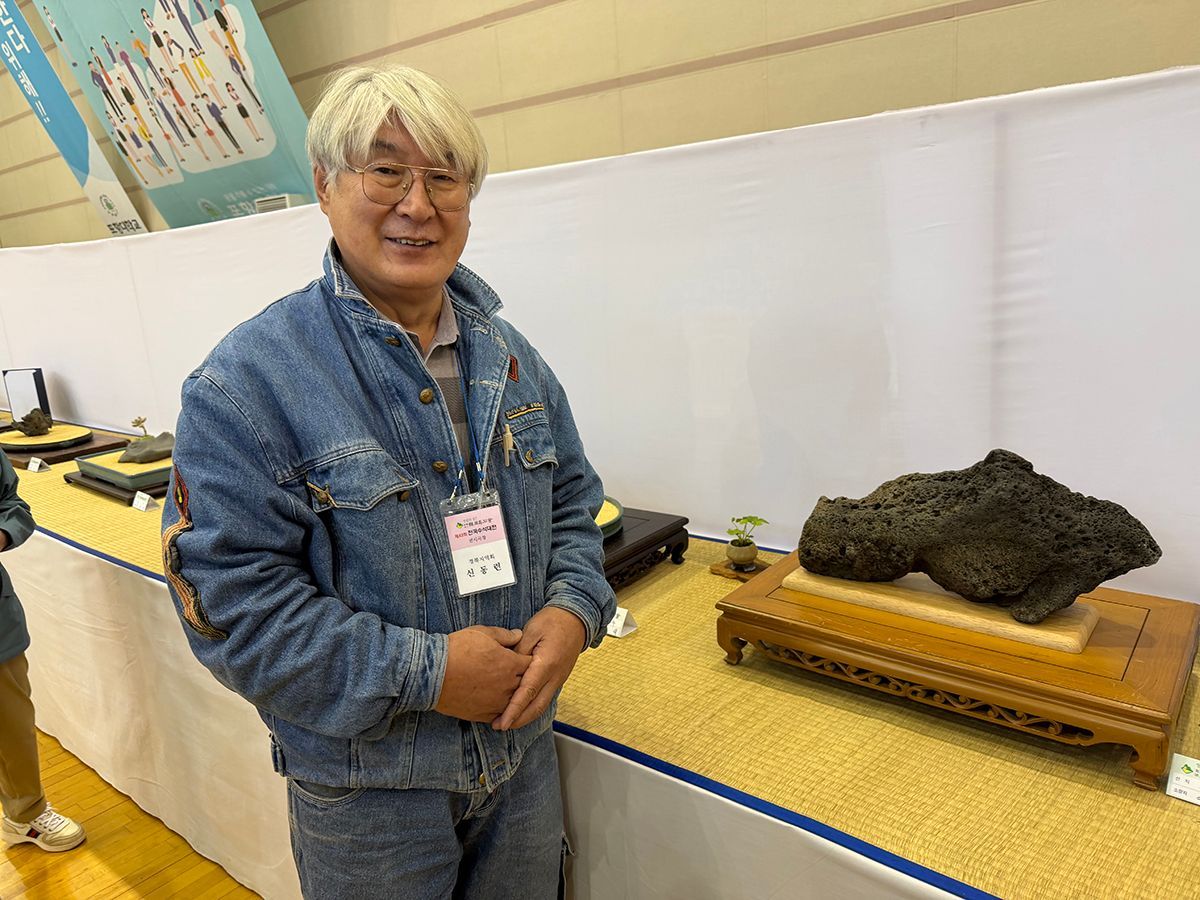
A committee of KSA judges awarded four awards at this exhibition: Grand, Gold, Silver, and Bronze.
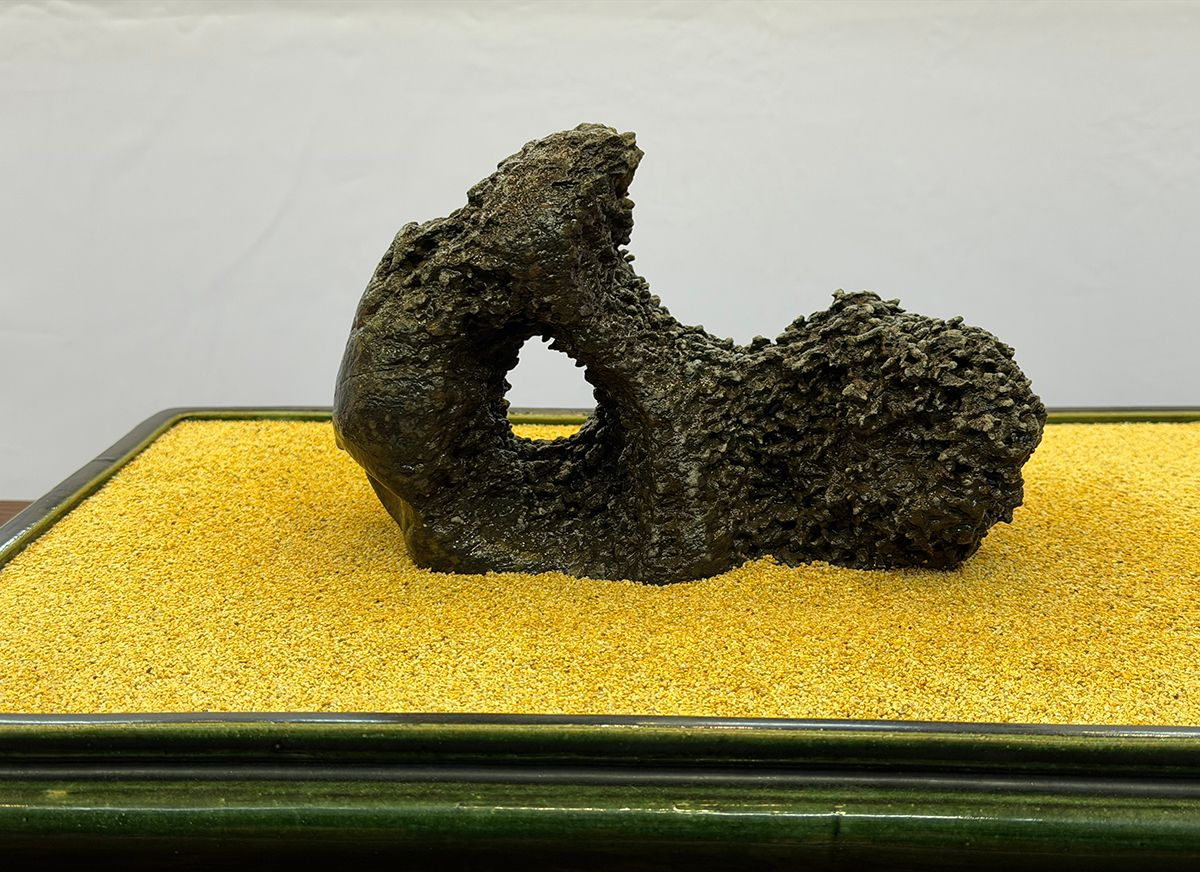
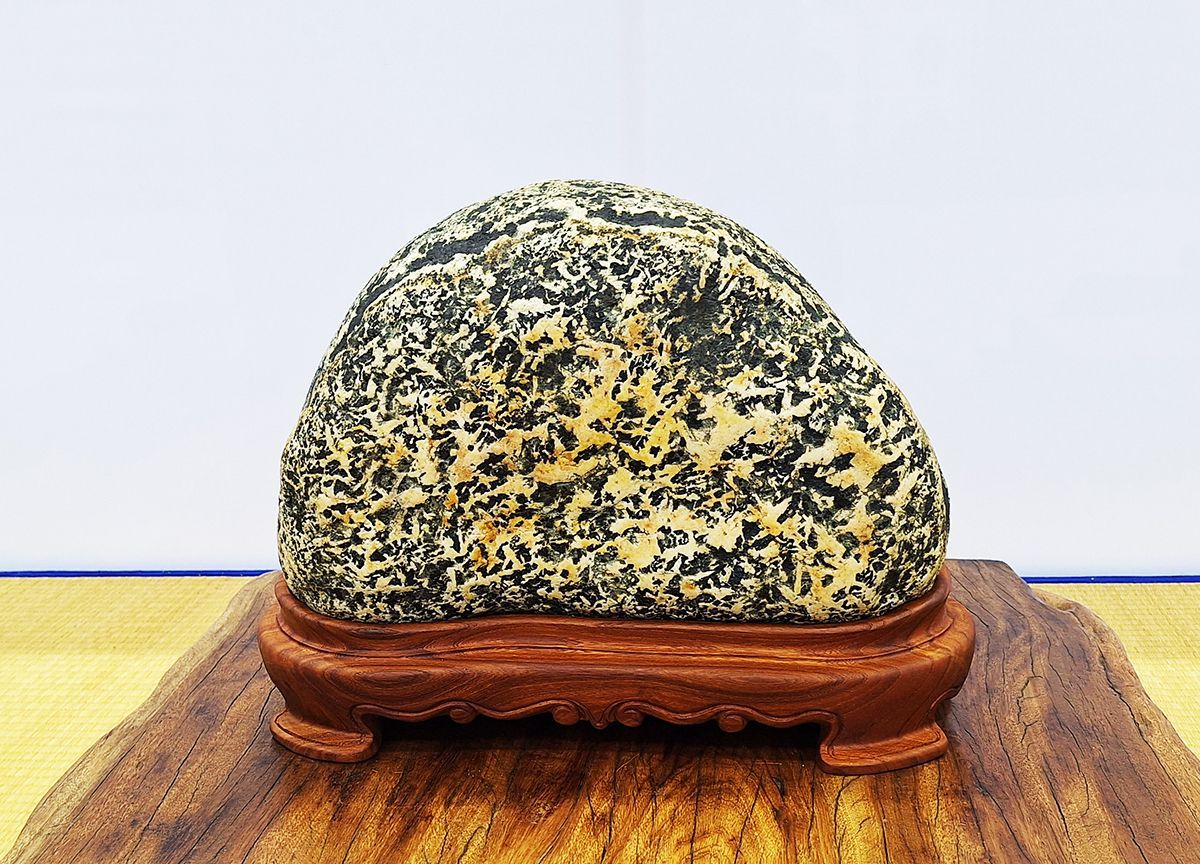
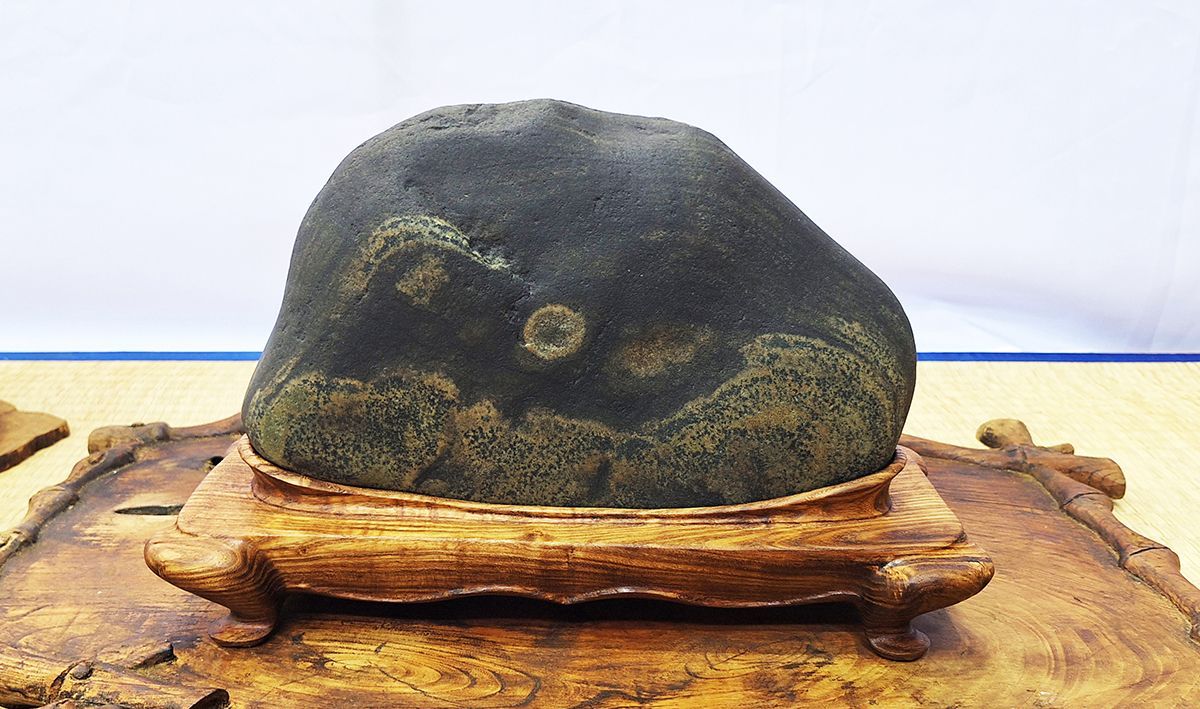
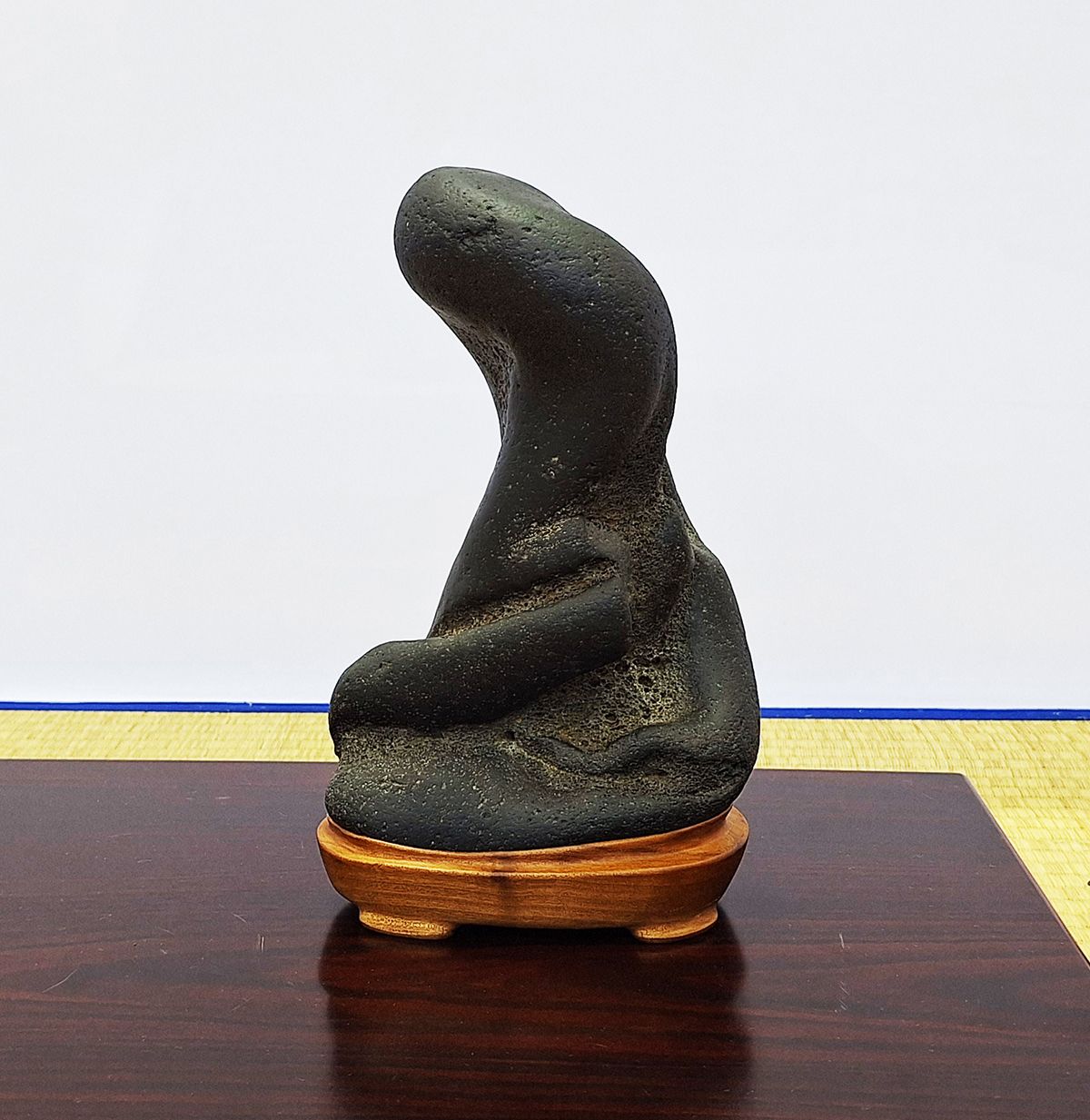
This exhibition was a rare opportunity to see the fine craftmanship of the glazed ceramic tray, the fine detail of bronze trays, and range of masterfully carved wood bases used in Suseok displays.
Throughout the exhibition, several volunteers periodically sprayed or misted the stones displayed in ceramic or bronze trays and sand with water. The water helps to highlight the detailed features of each stone. Sand used in the trays was from local sources, although some of it was produced by pulverizing larger stones to obtain a uniform size and color grains.
There was a small area devoted to an auction and sales from stone dealers. This was separate from the exhibition as the focus of the exhibition was on viewing and appreciating quality rocks.
The auction and sale of Suseok at the exhibition.
Over 200 members of the association gathered for dinner at a local hotel on November 15th the evening before the opening of this year’s display of Korean stones. During the dinner, Tom Elias, President of the Viewing Stone Association of North America was made an honorary member of the KSA. He was presented with a plaque and the official KSA pin.