Korean Suseok Museums
An account of the Suseok Museums in Korea
By Thomas S. Elias
South Korea has one of the most active communities in the world dedicated to the collection, study, and display of unusual natural stones for their aesthetic qualities. This practice arrived in Korea via China centuries ago, was later influenced by Japan, and evolved into a distinct practice that conforms to Korean aesthetics and culture. Many factors have contributed to this success in Korea. One major factor has been the establishment of several quality museums devoted solely to Suseok. Suseok (壽石, 수석) literally means “longevity stone,” a Korean concept referring to the stone's long life and the belief that it is indestructible.
Over the last three decades, a series of local government- and privately supported Suseok Museums has been established throughout Korea. Those museums, operated by county governments, employ contemporary display and interpretation methods, as well as informal educational techniques, to reach and inform a range of visitors, from children to senior citizens. These efforts are developing awareness of the art of natural stone appreciation among the general public and telling them about the geological history of their country.
The Pyeongchang Stone Culture Museum (평창 돌문화 체험관) located in Gangwon-do province in the eastern mountainous region of Korea, is a prime example of a county government-supported stone museum. This museum is the largest facility of its kind in Korea. It was established and opened to the public in May 2020. An array of individual stones is displayed indoors, while large garden stones are displayed in a serene outdoor landscape. Both venues encourage visitors to appreciate the beauty found in natural stones while fostering a closer connection with nature. Educational programs for children and adults are offered. This outstanding museum serves as a shining model for other countries to emulate.
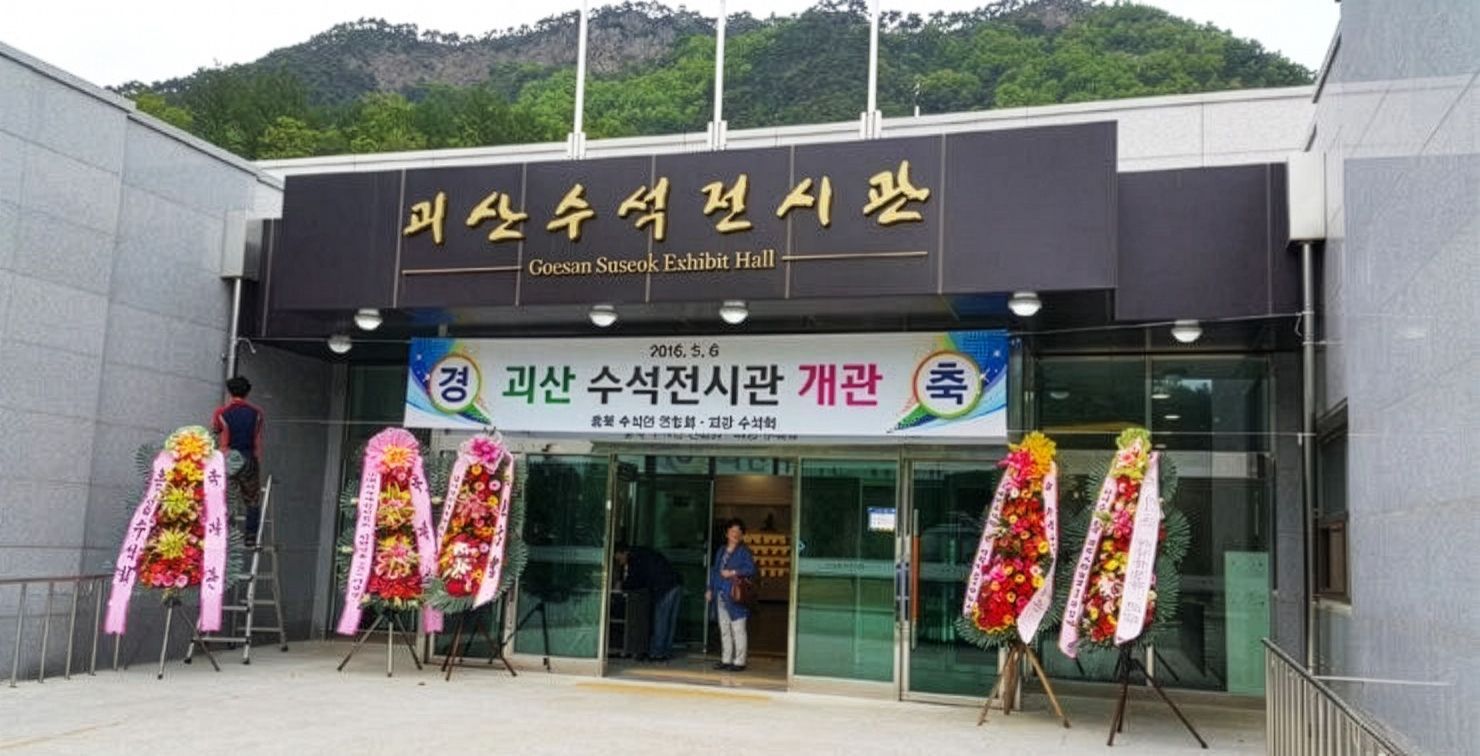
Another notable museum is the Geosan Suseok Exhibition Hall (괴산 수석전시관) at Jungwon University in Goesan County, Gyeongsangnam-do Province. This scenic county, located in the forested, mountainous region of central Korea, is experiencing a population decline. This museum was established in 2014 to provide visitors with an opportunity to learn about Korea's geological and cultural heritage through its display of natural stone and fossils. In addition to attractive displays of Suseok, this museum houses a library of stone-related books for visitors to consult and deepen their knowledge of viewing stone appreciation.
Some year-round Suseok exhibitions are part of a larger museum. The Pohang Museum of Steel Art (포항시립미술관) opened in 2009 and focuses on sculptural materials made of steel and on the display of natural stones. Pohang is located on the eastern coast and is the steel-producing capital of Korea. One floor of this museum is dedicated to Korean viewing stones. Attractive displays of Suseok offer visitors to the region an opportunity to appreciate the beauty of natural stones. Members of the Korean Suseok Association donated the stones. This museum also has one of the largest Suseok-oriented libraries in Korea.
The newest Suseok Museum just opened to the public in November 2025. The Danyang North Wall Museum (단양 북벽박물관) is located in Danyang in Chungcheonbuk-do Province. This inland province is a large inland basin supporting major agricultural enterprises, but is now becoming more industrial. Dramatic limestone formations and Nanham River gorges occur in the Danyang region. The Nanham River is one of the prime locations for collecting natural viewing stones. This museum features many outstanding examples of Nanham River stones. It is, I believe, part of an effort to attract more visitors from the Seoul-Incheon urban region.
The museum's director and curators are using high-quality photographs, graphics, and text to develop interpretive materials that effectively reach a broader audience.
The Danyang North Wall Museum also has contemporary style displays of stones designed to appeal to younger adults, and an area featuring stone displays for children. Developing an awareness and interest of Suseok in young adults and children is paramount to the future of viewing stone appreciation in Korea.
Smaller museums specializing in a single stone type or stones from a specific region or river exist. There are two permanent exhibits of Korea Flower Stones (화문석, 花紋石) in eastern Korea, along with three exhibits of stones from Jeju Island.
The government-supported Suseok museums are complemented by many privately supported museums. Most of these smaller private museums resulted from a person’s personal collection. Together, there are currently about 45 recognized museums devoted to Suseok in South Korea. I anticipate that the number of private museums will decline over the next decade, while government-supported institutions will continue to exist. Some of these will thrive and expand their collections and outreach. I think the presence of Suseok museums throughout Korea is one reason that the number of people engaged in viewing stone appreciation has remained relatively stable. In contrast, Japan does not have a government-supported museum devoted solely to Suiseki. This has, I believe, contributed to the steady decline in the number of Japanese Suiseki clubs and people collecting viewing stones over the last three decades.
The long-standing Korean Suseok practice of stone appreciation is thriving due to several key factors, including numerous museums, clubs throughout the country, regional exhibitions, an annual national exhibition, a steady supply of natural stones, and its connection to Korea's cultural history.