
The Seven Stones of Kyoto
A detailed and illustrated account of the historically important Seven Stones of Kyoto
By Thomas S. Elias
Several tributaries, flowing from the mountains above Kyoto, join to form the Kamo River that divides the ancient capital of Japan. The combination of the mountains, rivers, and forests surrounding the city and its tributaries is synonymous with the development of garden rocks and suiseki in Japan. The seven stones are a revered group of garden stones gathered from the upper reaches of the Kamo River, which were among the most highly valued of the stone types found in this region.
For centuries, the literati and high-ranking government officials sought rocks suitable for focal points in gardens and as individual stones to grace tokonoma and other interior spaces. This led to the identification of seven types of rocks known as the
Kamo-nana-ishi (加茂七石)
or seven stones of Kyoto. These were named after their source location.
The Seven Stones of Kyoto sign in the Seiryu-en Garden in Kyoto.
The following chart of the Seven Stones of Kyoto represents the stones from left to right.
| Stone Name | Reading | Features |
|---|---|---|
| 畚下石 | Fugooroshi-ishi /Fuguro-ishi | A chert or limestone from near Kurama, named after the traditional straw basket (fugo) used to carry stones and coins to go up steep paths; once used as a fire-starting stone. |
| 紫貴船石 | Murasaki Kibune-ishi | Purple-toned stone from the Kibune area; used for garden settings and stepping stones |
| 紅加茂石 | Beni Kamo-ishi | Reddish chert known as “Kyoto’s red stone”; also called niku-ishi or “meat stone” for its marbled appearance. |
| 糸掛石(賤機石) | Itokake-ishi /Shizuhata-ishi | Silica or quartz with thread-like patterns on the surface; from the Shizuhara area, located in the upstream portion of the Kamo River. |
| 雲ケ畑石(畑石) | Kumogahata-ishi | Reddish or brownish type of chert found near Kumogahata Village, north of Kyoto; rustic texture |
| 鞍馬石 | Kurama-ishi | A strong, dark granite or diorite from Mt. Kurama; used for lanterns, bridges, and major garden features. |
| 八瀬真黒石 | Yase Maguro-ishi | Deep black hornfels from Yase in the upper Kamo River system; highly valued for its deep color and durability |
The concept for the seven stones developed early; the term “Seven Stones of Kyoto” was coined by Ouchi Tanseki in his book Kamo Nana-ishi published in 1952. Ouchi was a prominent figure in Japanese suiseki in the 1950s and 1960s in Kyoto. He formed the Kyoto Aiseki Club in 1958, and in 1968, Ouchi established the Japan Suiseki School, where he taught students the principles and methods of the Japanese style of viewing stone appreciation. Approximately 700 students graduated from this school by 1976. Between 1952 and 1968, he published four books about stones of the Kyoto region, and a fifth more general book Aiseki Reading Book. These books and his school contributed significantly to the popularity of Kamo River stones throughout Japan.
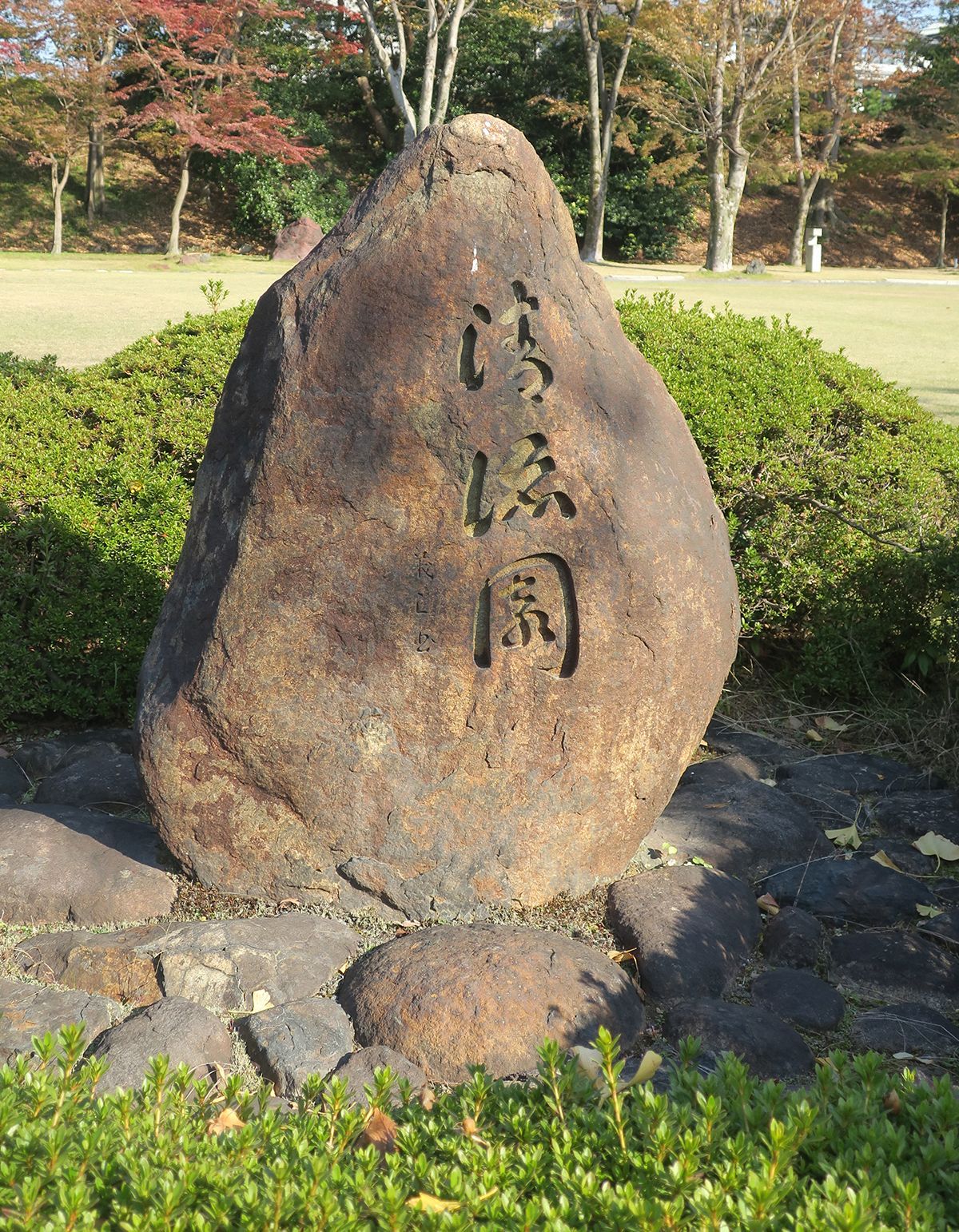
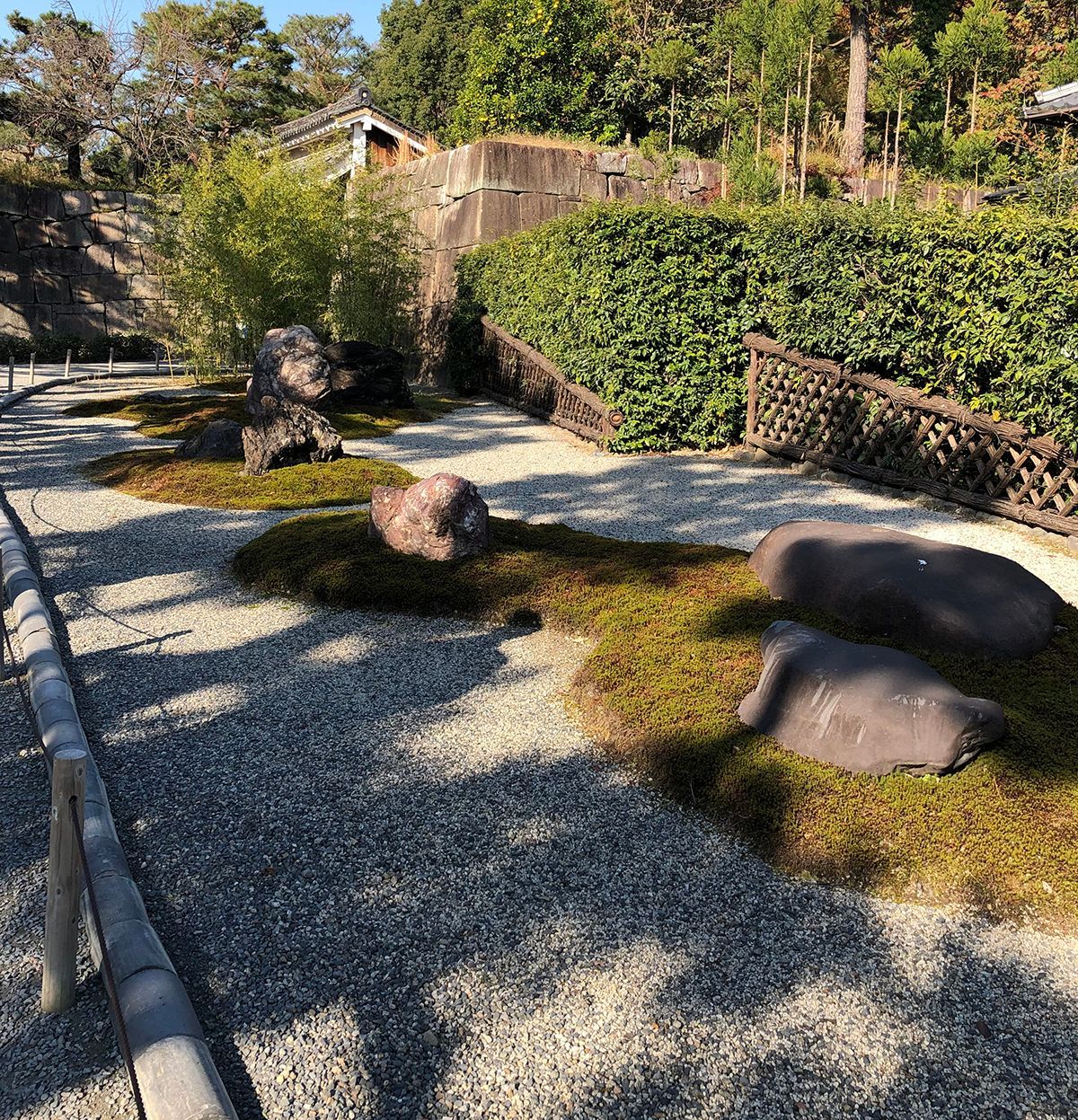
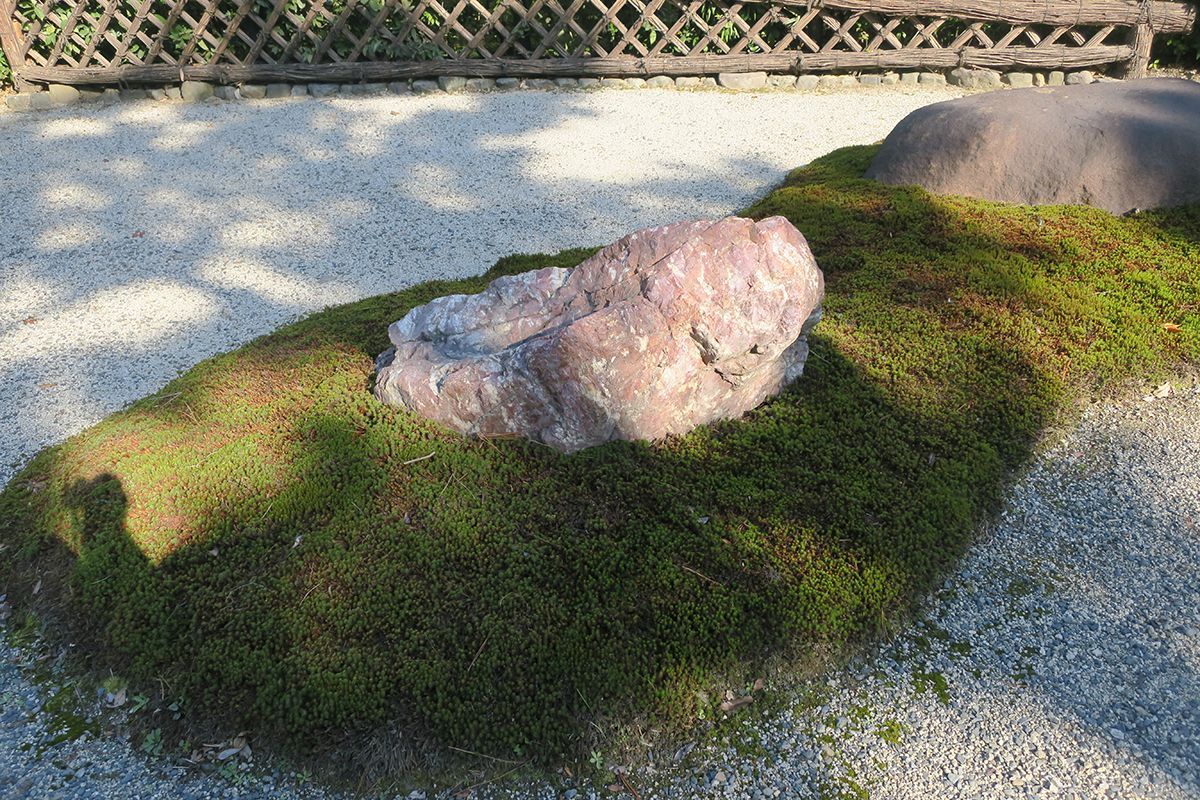
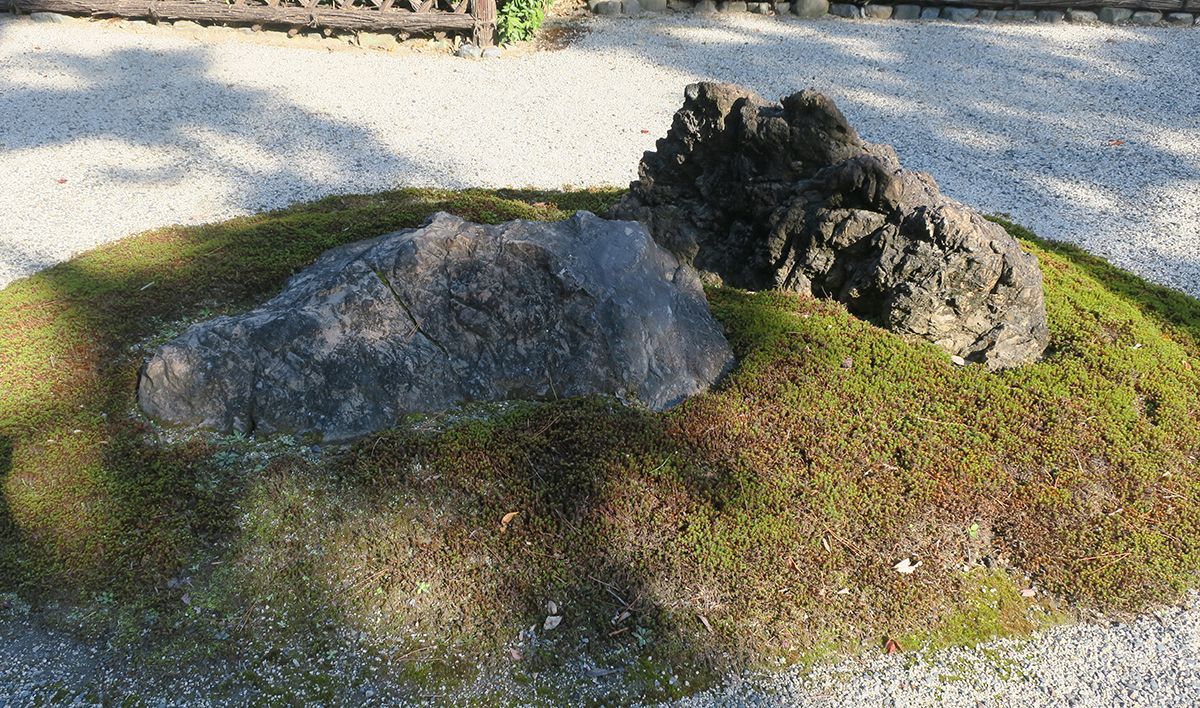
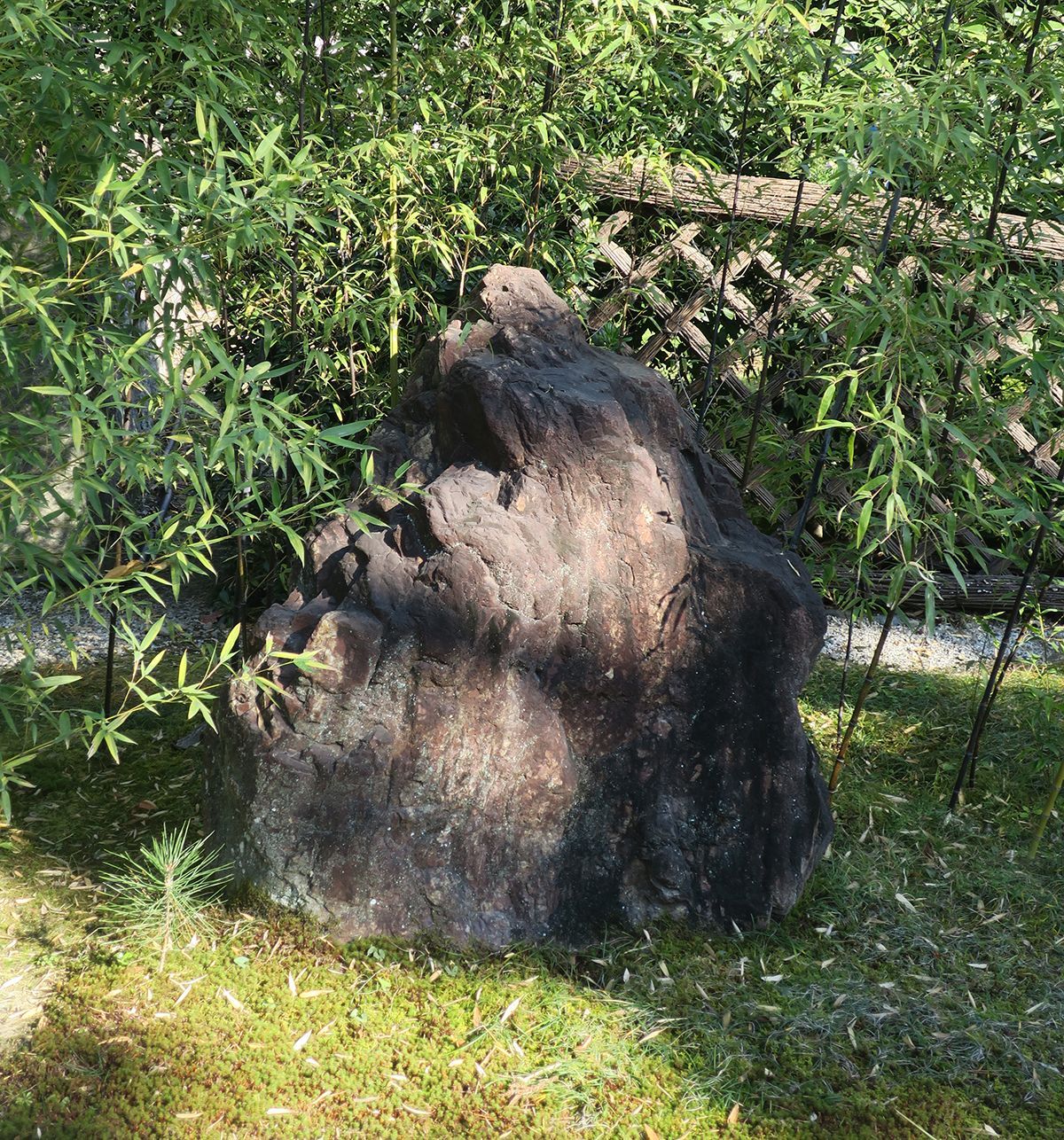
In 1965, the Seiryu-en Garden, featuring the seven stones of Kyoto, was constructed within the Nijo Castle grounds in Kyoto. The Nijo Castle, completed in 1626, served as the Kyoto residence of the Tokugawa shoguns and is one of the most famous surviving examples of early Edo-period architecture. According to Yamaguchi (2022), the Seiryu-en was built during the peak of popularity of the seven stones of Kyoto. He stated, “From the late Showa period through the Heisei era, Kurama Stone and Kibune stone were widely used in landscaping, though the Seven Stones of Kyoto were not as widely recognized as they were in the suiseki world.” The best reference to learn more about Kamo River stones and the Seiryu-en Garden is Ouchi Tanseki’s 1976 book Kamogawa Stones of Kyoto Illustrated (1976).
The supply of Kamo "nana-ishi garden stones has been depleted, and quarrying them is no longer allowed. Imae’s 2019 study of the Kamo nana-ishi Stones noted that the supply of authentic Kamo River stones is extremely limited and that the existing stones are now designated Important Cultural Properties, subject to strict conservation standards.
All viewing stone and suiseki enthusiasts visiting Kyoto for the November Taikanten exhibition in the Miyako Messe Convention Center should also plan to visit the Seiryu Garden within the Nijo Castle. It will help develop a better perspective of these important stones and their use as kaiseki and suiseki.
References:
Imae, H. A Study on the Replacement of Kamo Nanseiki Stones in the Repair of Gardens Designated as Cultural Properties. Bulletin of the Kyoto City Cultural Protection Division, no. 2, pp. 151-173. March 2019.
Ouchi, Tanseki. Stones of Kyoto: How to Identify and Collect Them. Tokuma Shoten. 1964.
Ouchi Tanseki. Kamogawa Stones of Kyoto Illustrated. Kamogawa Stones Publishing Office, Kyoto. 1976.
Yamaguchi, Mitsura (2022). A Study on the Seven Kamo Stones: Focusing on Kurama Stone.
—Graduation research, Kyoto University of the Arts, Correspondence Education Department. https://www.kyota-art.ac.jp/t/grauationworks/detail/8866/