Malaysian Wax Stones: 10th
World Bonsai Friendship Federation Convention
A detailed examination of Malaysian Wax Stones displayed in the 10th
World Bonsai Friendship Federation
By David Nguyendo
The World Bonsai Friendship Federation Convention (WBFF) was held in Kuala Lumpur, Malaysia, August 28-31, 2026. This international exhibition of penjing, bonsai, and viewing stones, held every four years, was hosted by the Malaysia Bonsai and Suiseki Society. This year’s convention consisted of a bonsai exhibition and demonstration, a viewing stone exhibition and lecture, and displays exhibited at the convention. This article will focus on the 232 stone displays exhibited at this convention.
The suiseki exhibition and competition at the 10th WBFF were displayed indoors at the popular Bukit Jalil shopping pavilion. All stones were grouped into one of these three stone categories: (1) the wax stones, (2) the river stones, or (3) the mountain stones. The stones were then sorted and displayed separately by size: large, medium, or small. About 90 stones, representing nearly 40% of the total, were Malaysian wax stones. The Malaysian wax stones stood out from the other stones due to the color, surface texture, and form.
Figure 1: The larger stones were grouped together.
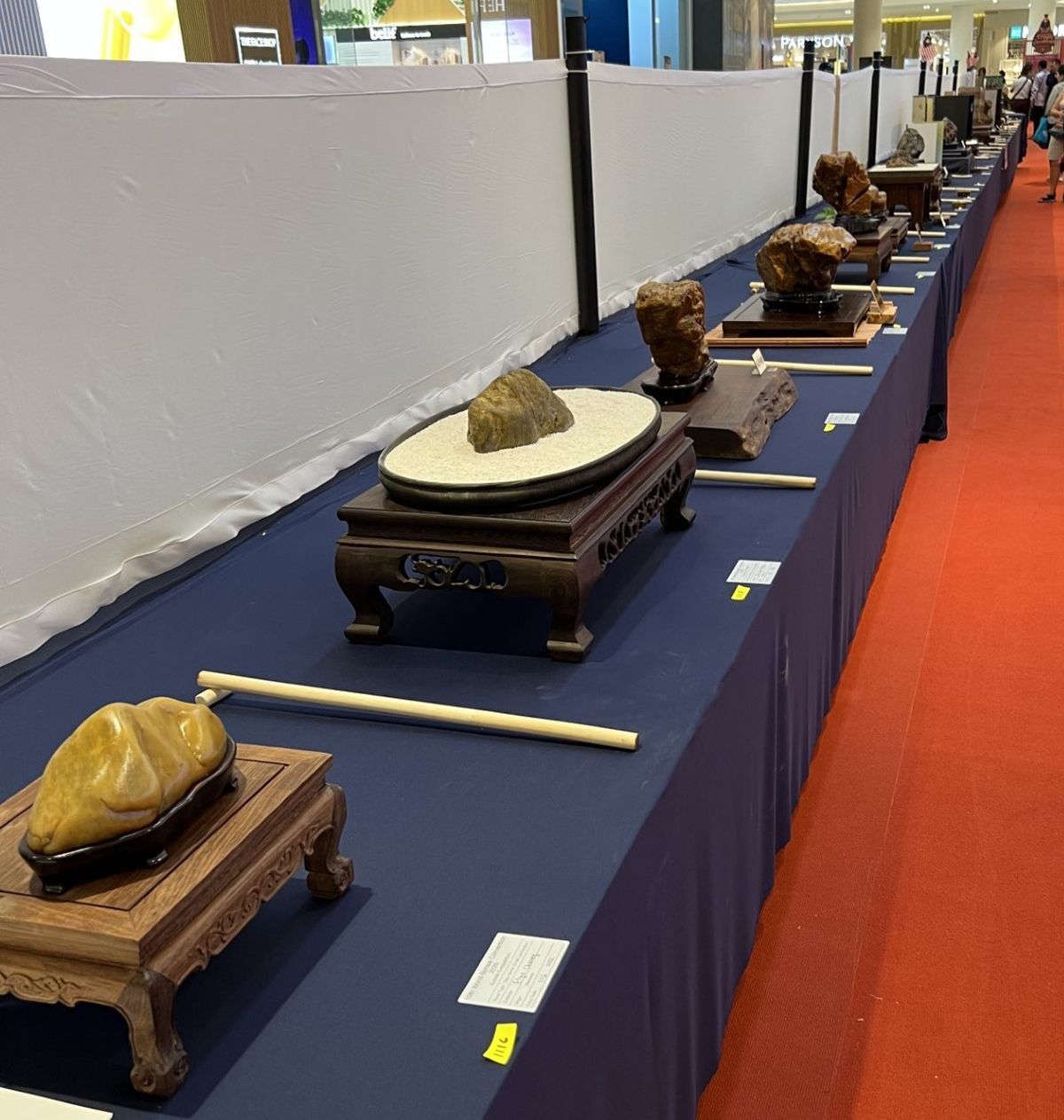
Figure 2: The majority of the medium-sized stones were wax stones with varying colors and shapes.
The spacing between the medium-sized displays was better than the spacing between the larger stones which provided a better viewing experience.
Figure 3 and 4: Two Buddha figure wax stones in yellow and dark orange.
Malaysia produces a variety of excellent viewing stones, including wax stones found in the northern Kedah and Perak regions. These stones are beautiful and eye-catching, with a deep rich yellow color. Dark reddish colored wax stones are highly prized.
Many wax stones are smooth from being polished in river waters. These stones are composed of uniform, fine-grained, microcrystalline quartz or chalcedony with varying amounts of iron oxides that give the stones their color.
The wax stones are evaluated by an additional criterion, light penetration, not used in most viewing stones. A Malaysian wax stone collector demonstrated how to determine a high-quality stone from a lower-value one. A small flashlight was placed directly on the stone's surface to see how far the light penetrated and how bright and uniform the color was. Wax stones with deeper light penetration are considered more valuable and highly prized.
However, not all wax stones have a deep rich yellow color and smooth skin. Some wax stones can be very dark, with rough, wrinkled skin.
Some of the displays included a brightly colored landscape or flower-patterned paneled screen behind the stone. Other accompanying objects included potted plants, small incense burners, and other artifacts. The displays reflected a more distinct Malaysian aesthetic influenced by Chinese tradition, rather than the more subtle minimalist approach seen in comparable Japanese displays.
Figs. 5 & 6: Two small, mountain-shaped wax stones of similar size but with different surface textures and colors.
Other noticeable features in the WBFF stone exhibition were the use of pure white sand instead of tan and light brown sands in tray displays. Also, some carved wooden bases (daiza) served two functions: holding and orienting the stone, and functioning as a landscape tray. A portion of the wooden base was carved and filled with white sand to suggest a pool at the base of a waterfall. This makes the display more explicit and less suggestive. Exceptional viewing stone displays prizes suggestion of literal depiction.
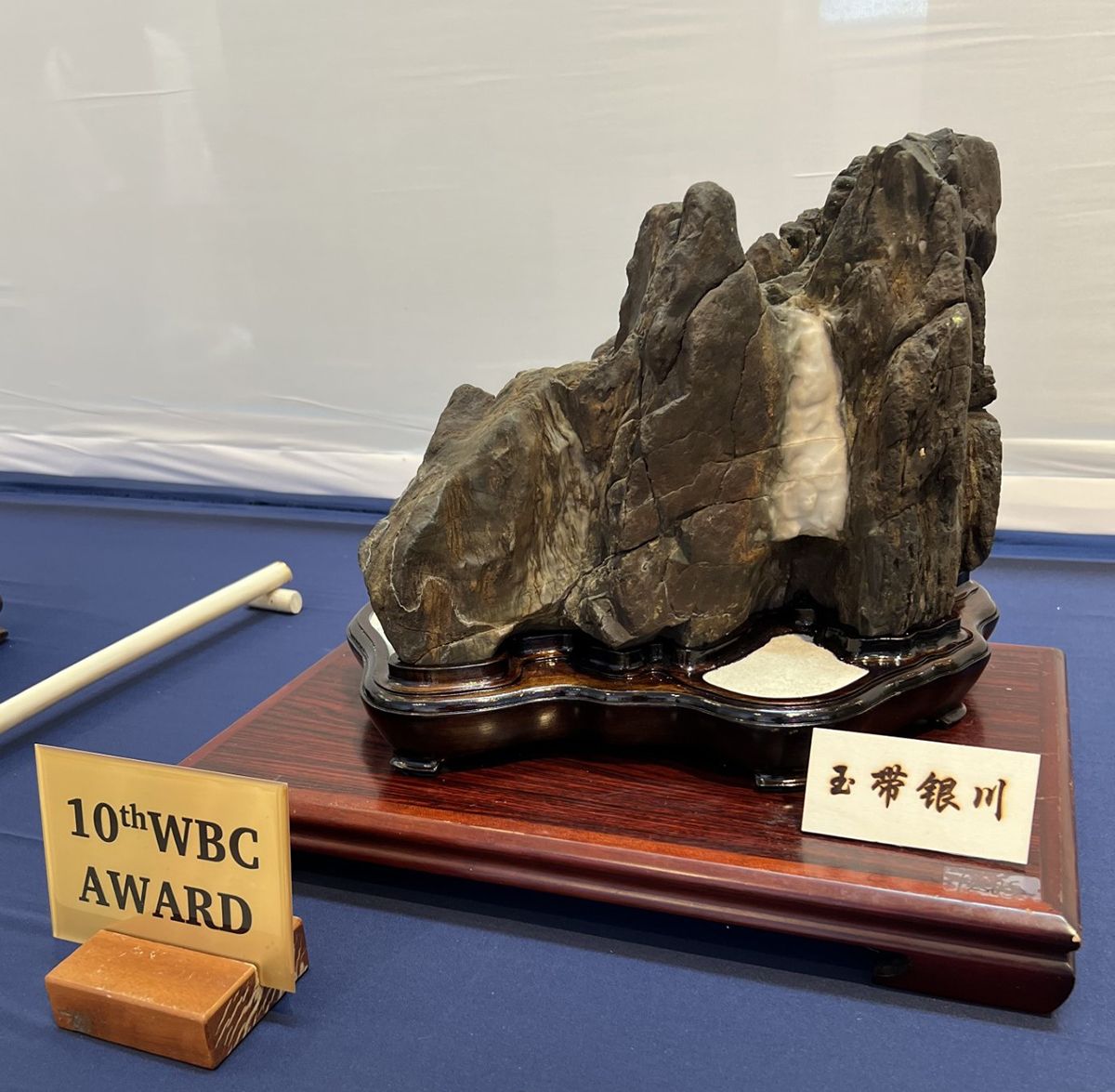
Fig. 7: This stone suggests a mountain with a waterfall. The wooden base also has a small carved-out area that contains white sand to represent a pond or lake. The white label said “Jade Mountain with silver waterfall.”
Fig. 8.: A wax stone sits on a wooden base with an area underneath the stone filled with white sand to represent a river.
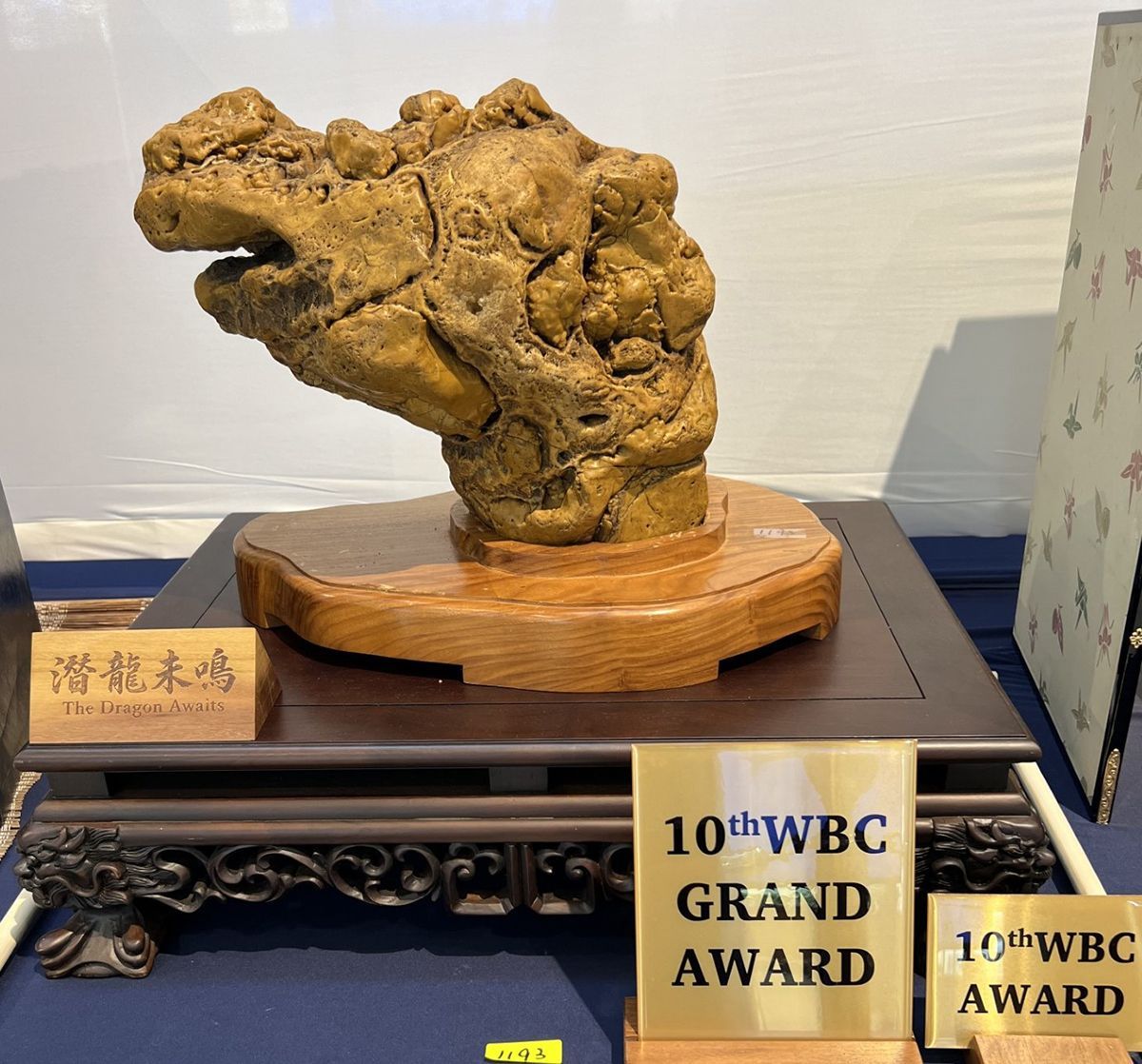
Fig. 9: An international committee of judges evaluated and gave awards to several displays. The Grand Award went to this large yellow wax stone.
This convention provided an opportunity to see so many quality stones, especially wax stones. The array of shapes, colors, and other features was amazing. Even though the viewing stones were heavily influenced by Chinese stone appreciation practices, the quality of the Kedah and Perak wax stones made it a special occasion. Many consider the Malaysian wax stones to be as good as the southern Chinese wax stones.