
Suifu Sanjin (水府散人, 1921–1994)
The Showa Literati Who Devoted His Life to Revealing the Soul of Stones
By Christophe Kurz, France
Among the great figures who shaped the history of suiseki in the twentieth century, few inspire as much respect as Usui Masashi (薄井正志), artist name Suifu Sanjin (水府散人). His artist name may be understood as “the reclusive literati of Suifu,” with “Suifu” being an old name associated with the Mito region, where he spent much of his life.
Suifu Sanjin was a consummate literati who devoted his adult life to an intense study of classical literature, arts, and cultures associated with traditional scholars. He is known as a talented ceramist, calligrapher, and seal carver, as well as an exceptional connoisseur of suiseki. Those who knew him remember Suifu as a man who embodied, throughout his life, the ideal of the bunjin, the Japanese literati. Heir to the tradition of the Chinese scholar-literati, the bunjin is not defined by erudition alone. Poetry, calligraphy, painting, the contemplation of nature and a profound inner quest all form part of the same path. Rather than reproducing the visible world, the bunjin seeks to reveal its essence. It was precisely this sensibility that shaped Suifu Sanjin’s entire approach to suiseki. At a time when post-war Japan was gradually moving away from many traditional aesthetic values, Suifu Sanjin remained faithful to a deeply humanistic conception of art. He lived in relative solitude, guided above all by his convictions. For him, suiseki could never be reduced to a mere object of collection or an aesthetic exercise. It was a path toward understanding—a means of entering into dialogue with nature, but also with the great minds of the past.
A Life Devoted to Suiseki (水石)
His interest in stones began in the late 1940s, when he discovered, in a Kyoto antique shop, a stone suggesting a humble thatched cottage perched upon a rocky promontory. From that moment onward, his life became centered on a question that would never cease to occupy him: “What is a true suiseki?”
Over the decades, Suifu Sanjin deepened his study of suiseki while cultivating an extensive knowledge of classical culture. He immersed himself in Chinese poetry, Japanese literature, calligraphy, seal carving, ceramics, scholar’s objects, and the tea ceremony. In his eyes, these were not separate disciplines, but different expressions of the same sensibility. For him, a stone never existed in isolation. It entered into dialogue with an ancient poem, an ink painting, a kakejiku, an incense burner or a simple flowering branch. Each element contributed to the creation of a contemplative world in which nature became the medium for silent meditation. This cultivated sensibility also appears in the names he gave his stones. Far from describing a landscape literally, these poetic names evoke a place, a season, a memory, or an image. They never impose a single interpretation; instead, they open a path for the imagination of the person contemplating the stone.
An Aesthetic of Suggestion
His stones are not always immediately accessible. They demand a certain degree of experience and knowledge of suiseki, as well as inner receptiveness. Their beauty never seeks to impose itself; it reveals itself slowly, at the pace of contemplation. At first sight, some of his stones may even appear austere, raw, almost ordinary. Their power Lies in their ability to reveal an inner landscape gradually. I have personally experienced this with stones formerly belonging to Suifu Sanjin: acquisitions I initially questioned have, with time, become pieces I deeply cherish. Where the stones of the master Ichiu Katayama often strike the viewer through the purity of their silhouettes and the immediate balance of their compositions, those selected by Suifu Sanjin generally demand more time. They do not reveal their beauty at first glance; they invite repeated contemplation, gradually disclosing their depth and richness. They possess what the Japanese aesthetic
yūgen (幽玄) is: that mysterious and subtle profundity which escapes words. A mountain remains partly veiled; a valley disappears into mist; a summit vanishes behind an imaginary cloud. In the traditional appreciation of suiseki, yūgen generally comes into play after one has considered more immediately perceptible qualities such as form, surface texture (hada), patina, and the overall balance of the stone. For Suifu Sanjin, however, this mysterious depth appears almost to have been the starting point of judgment. A stone could be imperfect in silhouette and yet become exceptional if it opened a space for the imagination. This apparent simplicity reflects a profoundly Japanese aesthetic in which restraint, sobriety and suggestion take precedence over spectacle. Suifu Sanjin therefore favored discreet stones, often dark in color, principally from the Kamo and Tenryū rivers, as well as Hakkaisan stones, whose character reveals itself only through prolonged contemplation. Through this search, Suifu Sanjin was not looking for the most impressive stone, but for the one that left room for silence, imagination, and memory. For him, beauty did not reside in what the stone showed, but in what it suggested.
Figure 1. Kamogawa-ishi named 峨岳天 —Gagakuten, "Majestic mountain touching the sky," 27 cm wide.
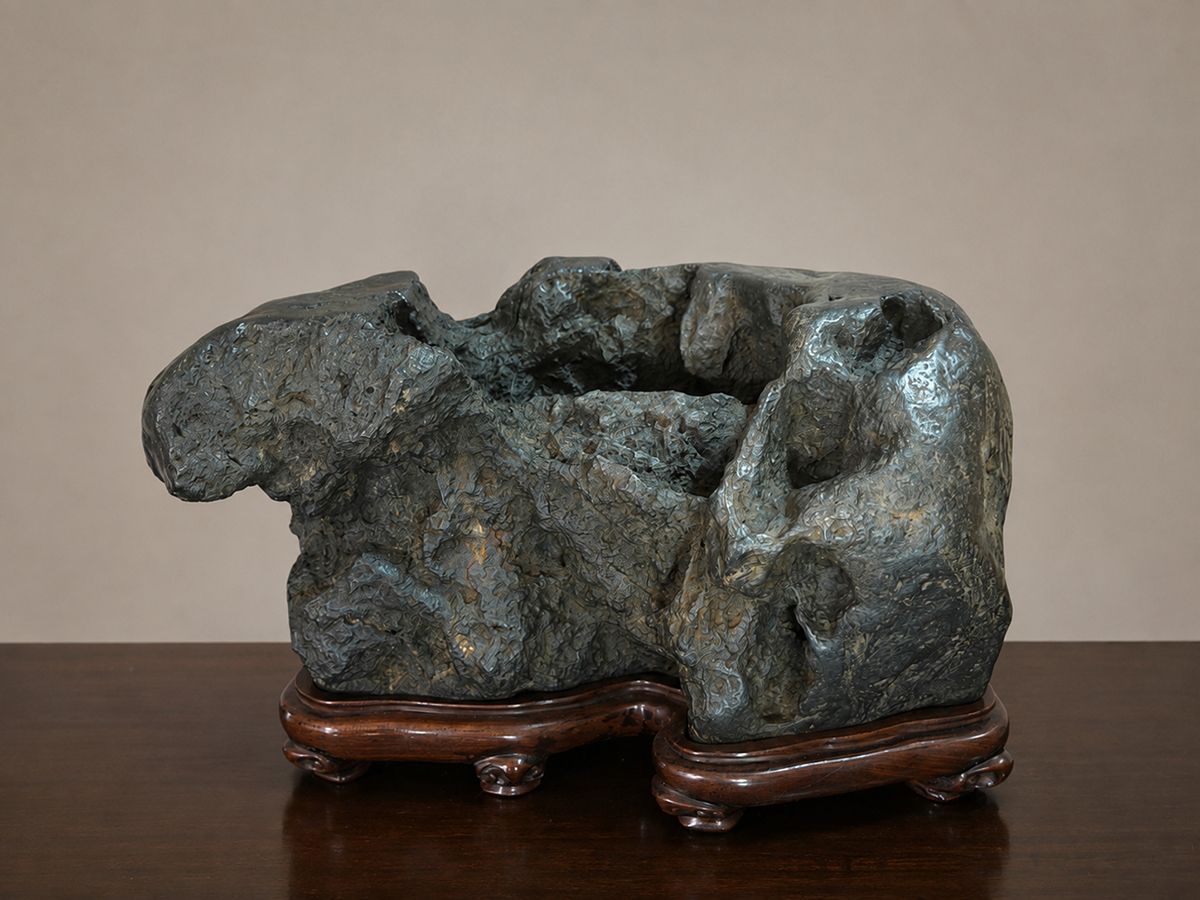
Figure 2. Hakkaisan-ishi 25 cm wide named 興凱湖 “Xingkai lac,” 25 cm wide.
Figure 3. Tadami-Ishi named 東海 — Tōkai “The East Sea,” 23 cm wide.
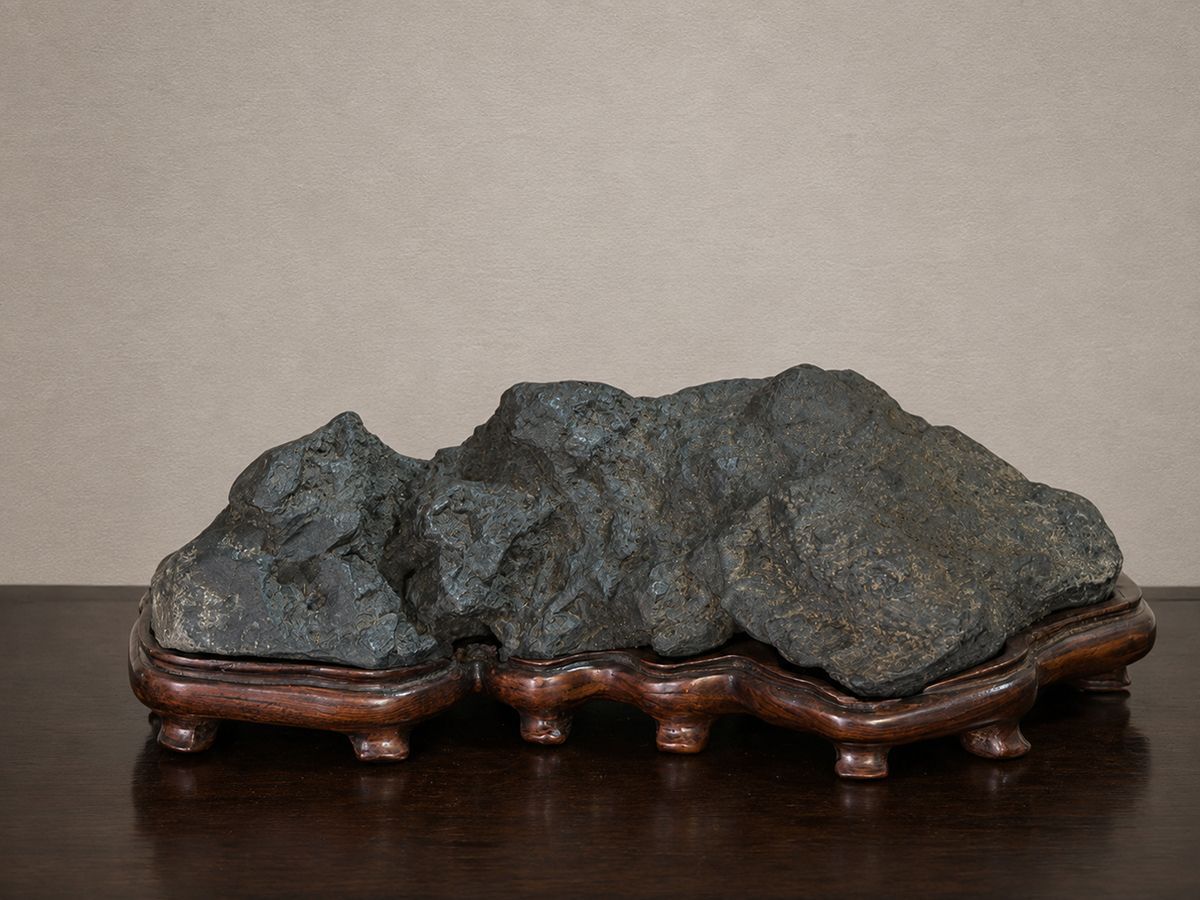
Figure 4. Kamogawa-Ishi named 八雲山 Yakumoyama "Mountain of the Eight Clouds,” 28 cm wide.
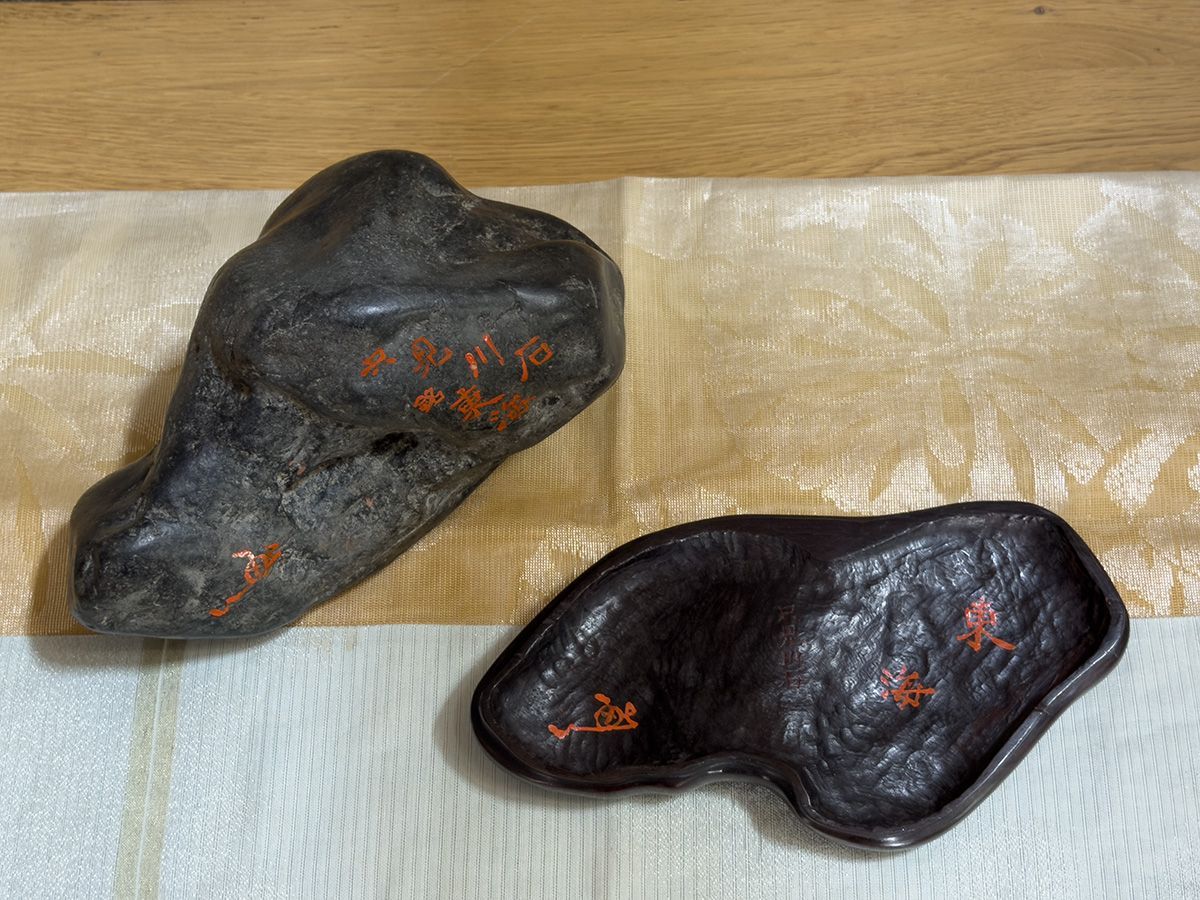
Figure 5. Kiribako with Suifu Sanjin’s box writing.
The Guardian of the Stones "Memory"
One of Suifu Sanjin’s most important contributions went far beyond the creation of an exceptional collection. He believed that a stone should never be separated from its history. For each of his most important pieces, he prepared a kiribako, a paulownia-wood storage box, upon which he carefully inscribed the stone’s poetic name, its river of origin, its former owners, the circumstances of its acquisition and, in many cases, his own observations.
His most treasured stones were therefore accompanied by a kiribako and a daiza made by his own hand, forming a coherent ensemble in which every element fully contributed to the work's identity. Thanks to these inscriptions, it is still possible today to trace the provenance of many stones, their passage through major Japanese collections, and, in some cases, even the precise circumstances of their discovery. For Suifu Sanjin, a stone deprived of its history was incomplete. Even more distinctive was his practice of writing directly upon certain stones in vermilion ink (shu), of the same type traditionally associated with seals, recording their poetic names and rivers of origin. This practice, which became one of his most recognizable signatures, often surprises Western collectors. Suifu Sanjin believed it was his responsibility to preserve the cultural identity of each stone, so that its history could accompany it into future generations.
A Master of the Daiza (台座)
Although Suifu Sanjin is universally respected as a collector, he is equally admired for his work as a creator of daiza. When he found an existing base unsuitable for a particular stone, he preferred to carve one himself. This decision was motivated neither by a desire for originality nor by any wish to display technical virtuosity. His creations were never intended to attract attention to themselves. Their purpose was to extend the stone naturally, giving it perfect stability without ever competing with it. The feet, carefully positioned beneath the stand, reinforce the visual stability of the whole while lightening the apparent mass of the wood. When a daiza was perfectly executed, the viewer could almost forget its existence, so naturally did it appear to emerge from the stone itself. In his finest works, the feet sometimes reach an extraordinary level of sculptural refinement. On some pieces, he even applied his personal seal, much as a ceramicist might sign a particularly accomplished work. Removed from their daiza, some of his stones can appear surprisingly modest. Many collectors might well pass them by without even picking them up. And yet it is precisely the intelligence of the daiza that reveals their full presence. The quality of the carved wooden base allows the stone to reach its full artistic expression. This demanding standard explains why Suifu Sanjin’s daiza continue to be studied by some of Japan’s finest craftsmen. They remain a reference not because they are spectacular, but because they achieve that rare balance in which human intervention becomes almost invisible.
A Living Legacy
More than thirty years after his death, Suifu Sanjin’s influence remains considerable. His kiribako are studied as genuine historical archives; his daiza continue to serve as references for the most demanding craftsmen; and his stones are admired not for immediate beauty, but for the depth of the worlds they evoke.
Through his writings, calligraphy, creations, and the hundreds of stones he assembled, he helped transform how suiseki is perceived. His life’s work reminds us that suiseki is, above all, an education of the eye. A stone never reveals all its secrets at first glance. It accompanies those who take the time to return to it, year after year. Through his stones, his daiza, his kiribako, his calligraphy, and his writings, Suifu Sanjin left behind far more than an exceptional collection.
He transmitted a way of looking at nature, an ethics of contemplation, and a vision of suiseki in which culture, history, and sensitivity are inseparable. Perhaps this is where his most precious legacy lies: He taught us to recognize the stones that have something to say — and then to listen to them.
Reference:
Morimae, Seiji. 2001.
The Retrospective Exhibit of Suifu Sanjin. Ginza Morimae LLC, Tokyo, 240 pages. No ISBN.