Stone of the Month:
June, 2026
“Mount Horai”
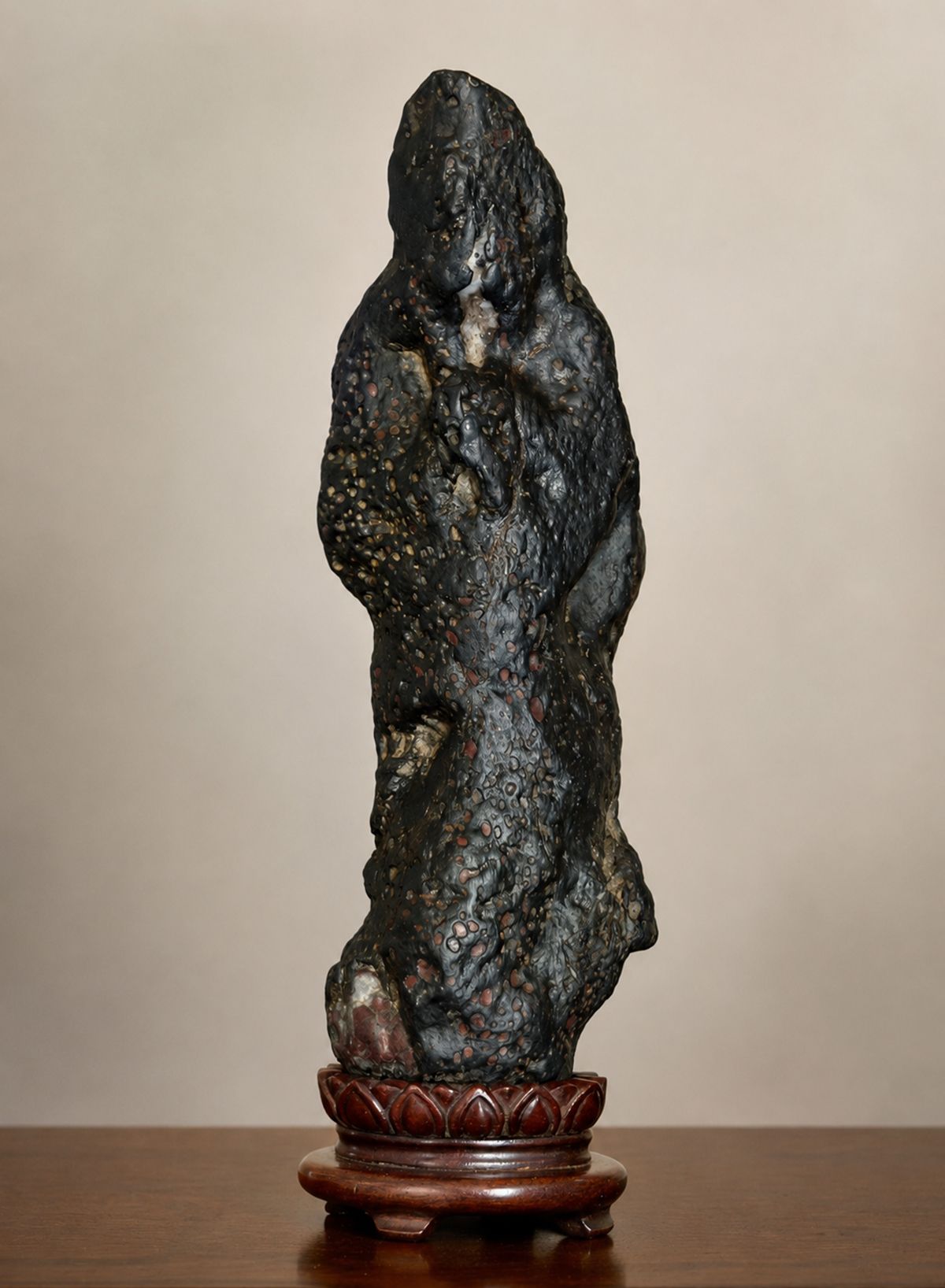
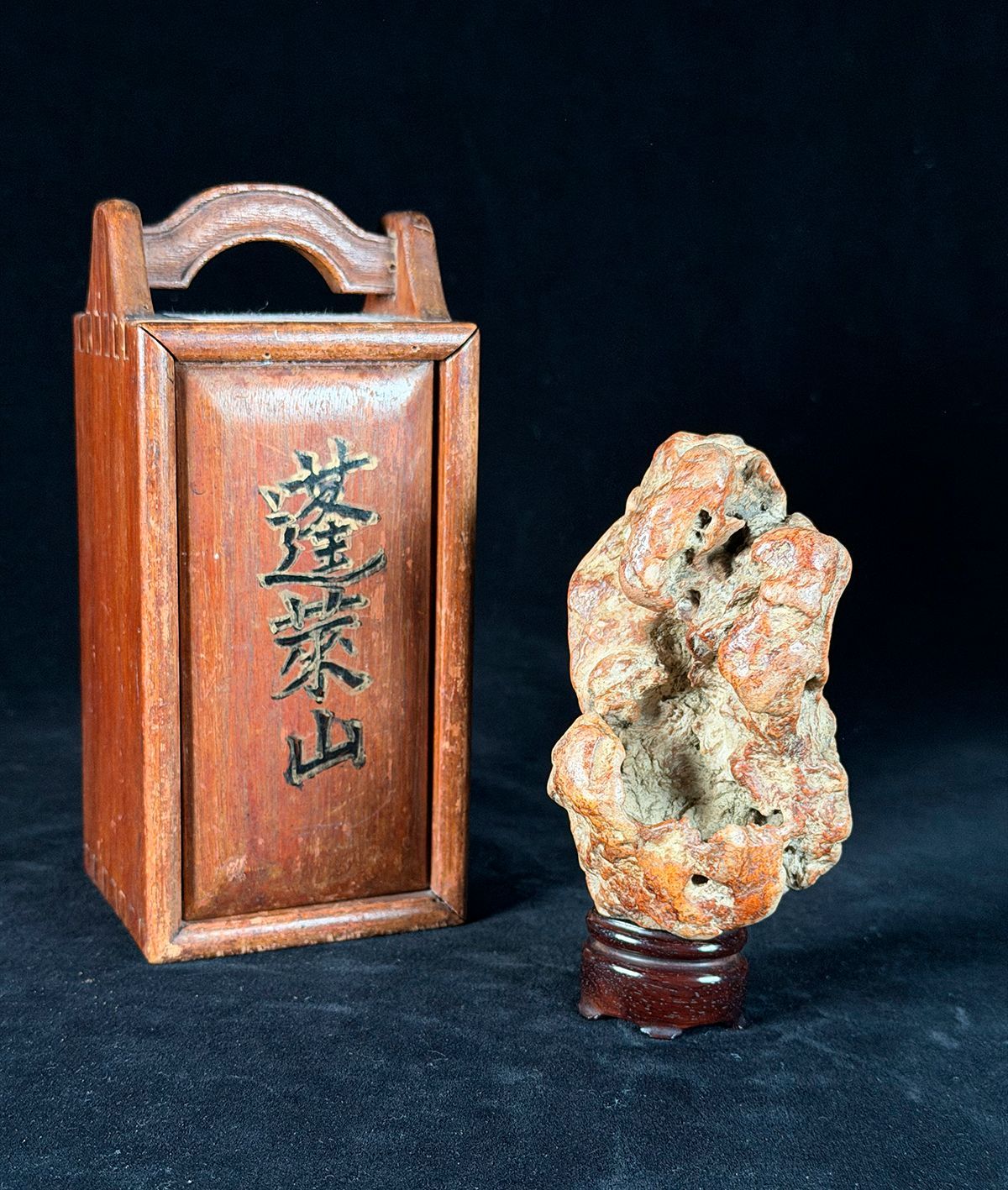
This Japanese Myojo-tsu stone and its lantern-style storage box strongly suggest a stone that has been collected and appreciated as a suiseki for many generations. The presence of a storage box indicates the value placed on this stone many years ago. This style of storage box, kiri-bako covered with lacquer, was popular during the Edo (1603-1868) and Meiji (1868-1912) periods. The writing on the front of the box translates to “Mount Horai,” a mythical, immortal mountain and a paradise island floating in the eastern sea in Chinese and Japanese mythology. The writing was in black ink, bordered by gold. This stone’s irregular form is unusual for a Japanese suiseki.
Myojo-tsu stones are found on Mount Kanakiyama in Ogaki City, Gifu Prefecture, Japan, and were more popular a century or more ago than they are today. Locally, the Myojo-tsu stones were known among the literati as Taikoseki or Lake Tai stones because of their similarity to the Chinese Taihu stones. A myojo-tsu stone, which was loved by literati Yanagawa Seigan in the late Edo period, is displayed in the Ogaki Local Art Museum. It is designated as an important cultural property of Gifu Prefecture.
This stone is 6.5 cm wide, 12 cm tall, and 4.5 cm deep, and is in the collection of Thomas S. Elias and Hiromi Nakaoji.